
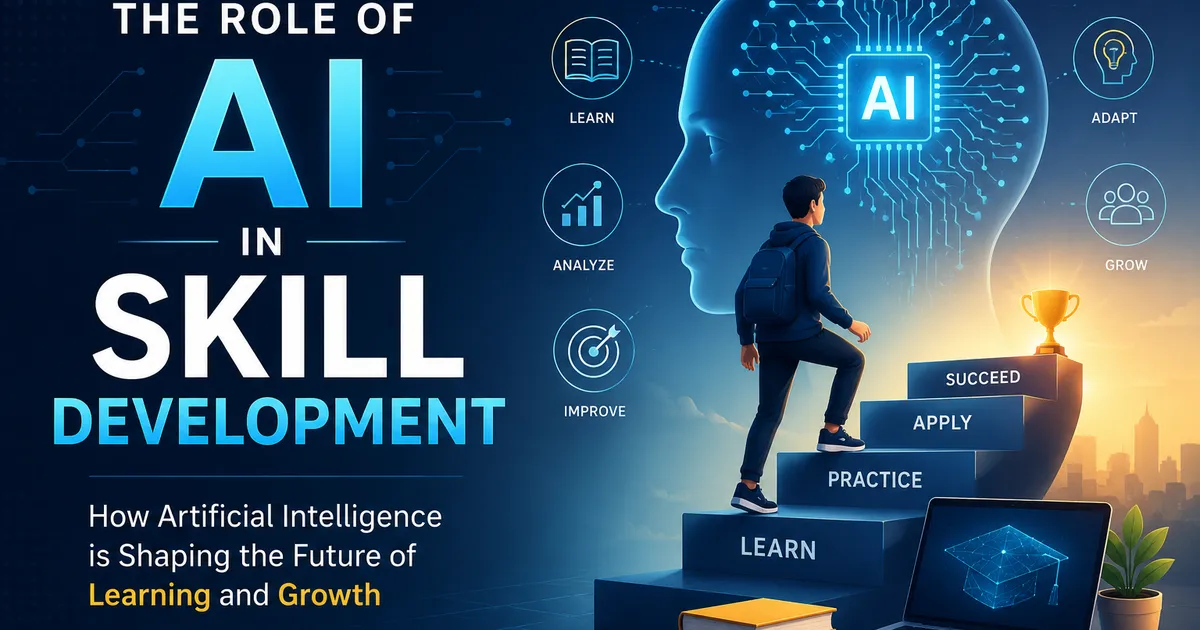
The Role of AI in Practical Skill Learning
Most discussions about artificial intelligence focus on corporate productivity or future job displacement. In our community workshops across Amritsar district, we see a much simpler and more immediate reality: students and young job seekers using free AI tools on their phones to study, practice English, and solve practical computer problems.
Used thoughtfully, conversational AI acts like a patient tutor that never gets tired of answering questions. But relying on it blindly creates its own problems. Here is what we have learned from working with students in our field sessions about using these tools effectively.
1. Breaking Down Complex Topics in Punjabi and Hindi
One of the biggest hurdles rural college students face is not technical ability, but the dense academic English used in textbooks, government job notifications, and software documentation.
Instead of struggling through an unfamiliar paragraph five times, students can paste the text into a tool like ChatGPT or Claude and ask:
"Explain this concept in simple everyday Hindi/Punjabi with an analogy from agriculture or local business."
When an abstract idea like relational databases or compound interest is explained through the lens of a village grain market ledger (arhtiya bahi-khata), the concept sticks. The goal is not to skip reading, but to unlock understanding so the student can return to the original material with confidence.
2. Troubleshooting Practical Computer Problems
In our computer literacy camps, learners frequently get stuck on specific tasks: writing a formula in Microsoft Excel, formatting a resume in Google Docs, or resolving a syntax error in basic Python code.
Before these tools existed, hitting an error often meant waiting until the next class or traveling to an internet cafe for help. Today, a student can paste an error message directly into an AI prompt and ask:
"Why does my VLOOKUP return #N/A when the names match? Here is my formula and sample data."
The tool explains what went wrong step by step, allowing learners to fix the problem themselves and continue practicing without losing momentum.
3. Low-Pressure Spoken English and Interview Practice
Many bright graduates in small towns tell us they hesitate to apply for customer support or remote jobs because they feel nervous speaking English during interviews. Finding a practice partner locally can be difficult, and peer judgment often holds learners back.
Free voice-mode features on phone apps allow learners to hold low-stakes practice conversations. A candidate can prompt:
"Act as an interviewer for an entry-level bank relationship officer job. Ask me one question at a time, listen to my answer, and tell me how to phrase it more professionally."
Practicing for fifteen minutes every day helps candidates build fluency, reduce anxiety, and prepare structured answers before they sit across from a human hiring manager.
4. Drafting Professional Communications for Small Businesses
It is not just students who benefit. Local shop owners, electricians, and independent service technicians in our camps often need to send formal quotation letters, dispute incorrect electricity bills, or write email proposals to suppliers in Delhi or Ludhiana.
Rather than paying an agent ₹300 at a tehsil document center to draft a basic letter, a business owner can dictate the key points into their phone and have the AI produce a clear, polite draft. The owner reviews the numbers, ensures the facts are correct, and sends it out directly.
Critical Cautions: What to Watch Out For
While AI tools offer clear advantages, they also present real risks that we actively warn students against:
The Copy-Paste Trap: If you copy an assignment or code snippet without reading it, you have learned nothing. In real jobs and technical interviews, you will have to explain your work. If you cannot explain the answer in your own words, do not submit it.
Plausible Errors (Hallucinations): AI models make up facts, cite non-existent court judgments, and misquote government scheme guidelines. Never trust an AI answer on exam syllabus dates, legal matters, or medical questions without verifying on the official portal (such as punjab.gov.in or ssc.gov.in).
Data Privacy: Never paste your Aadhaar number, bank account details, phone numbers, or passwords into any AI platform. These tools store chat history, and sensitive personal information must stay private.
The Bottom Line
Artificial intelligence is a tool, not a shortcut around honest effort. Used responsibly, it gives a student in a border village access to the same quality of personalized explanation that used to require expensive private coaching in big cities. The value is not in letting a machine do your thinking, but in using it to ask better questions and build real-world competence.